Diamond
How to Identify a Natural Diamond: Tips Every Buyer Should Know
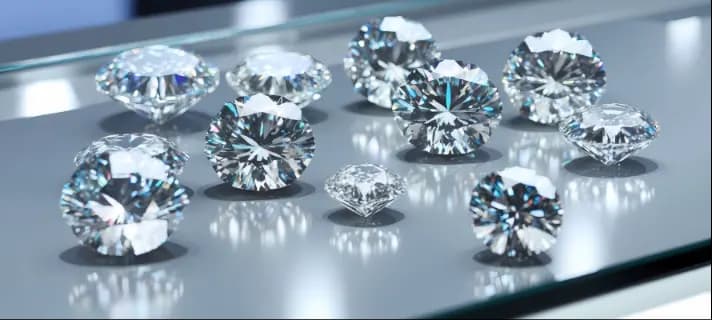
Buying diamond jewellery is a significant purchase, and price alone does not tell you whether the diamond's quality is good. . To the naked eye, natural, lab-grown, and simulated diamonds can look identical in a display case. However, there are six key ways to verify what you're buying: the certificate, the 4Cs report, the inclusions, the laser inscription, the paperwork, and the jeweller's willingness to show you all of it. This guide walks you through each one so you can check a diamond before you commit.
The stone may be exactly what the seller claims, or it might not be, and you can't tell just by looking. That gap between what you can see and what you're actually paying for is where problems start. Diamond clarity is a diamond-grading term with a precise, verifiable definition. You'll also hear the term diamond purity used, though it's not a formal grading category; most jewellers use it to mean the same thing as clarity.
Know the difference between natural, lab-grown, and simulated diamonds
A natural diamond forms beneath the earth's crust over a billion years or more, under pressure and heat no factory can fully reproduce. A lab-grown diamond has the same chemical structure, the same carbon crystallised into the same lattice, but it's produced in weeks inside a controlled facility. A simulated diamond, such as cubic zirconia or moissanite, is not a diamond. It's a different material shaped to look like one.
There is nothing inherently good or bad about any of these. You must know which one you're paying for because the price difference between them is significant and irreversible once the sale closes.
Check for a Diamond Certification
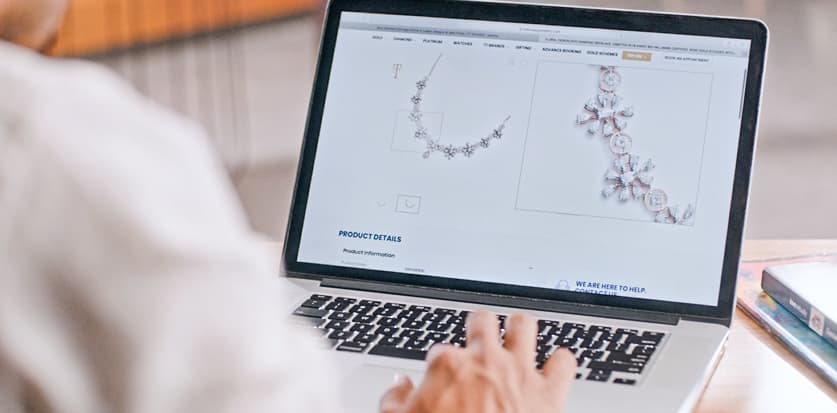
This matters even more if you shop for diamond pieces online, where you cannot hold the stone or examine it under a magnifying glass before paying.
A set piece or a loose diamond worth purchasing should come with a report issued by an independent lab, not just the seller's own assessment. The 4Cs were developed by the Gemological Institute of America (GIA), which is one of the best-known organisations for diamond grading. The International Gemological Institute (IGI) is another major independent lab widely used across India and the Gulf. A certificate is a third party document confirming that the diamond's quality matches what a lab actually measured. If a jeweller can't produce one, ask why.
Examine the 4Cs
Cut, colour, clarity, and carat weight decide a diamond's value together. Cut influences the way that light interacts with the diamond. Even a diamond with excellent colour and clarity will look dull if it's cut badly. Colour is graded on a scale from colourless to noticeably tinted. The less colour, the higher the value of a white diamond. Clarity measures internal and external characteristics under magnification. That's where the term diamond clarity gets used precisely. Carat is a measure of weight, rather than size. Two diamonds of equal carat weight can look different in diameter depending on how they're cut. Request the grading report for each of these, and make sure the jeweller explains to you what the grades are for the stone you are looking at.
Look for Natural Inclusions
Inclusions are the internal characteristics that remain after the formation of a diamond. Most natural diamonds have inclusions, and a grading report will map their location and type.
This is important for two reasons. First, inclusions are a part of what a certified lab examines to confirm that a stone is not synthetic or simulated. Second, they do not necessarily count as a fault. Many inclusions are invisible to the naked eye and do not affect how the diamond looks when worn. There are very few flawless diamonds, and they are priced at a premium. Minor, well-placed inclusions can still make for a beautiful diamond without any visible loss of quality.
Check the Laser Inscription
Diamonds certified with an inscription service have their report number laser inscribed on the girdle, the thin edge that encircles the diamond's widest point. This inscription is real and permanent, though it needs magnification to read.
Ask your jeweller to show you the inscription under a loupe or microscope, and then check that the number matches your certificate. A mismatch of numbers, or no inscription on a stone that purports to be certified, is a clear red flag.
Request proper documentation
In addition to the grading certificate, request:
- An invoice showing the carat, cut, colour, clarity, and certification number.
- Confirmation of the certifying lab and a way to verify the report on that lab's own website.
- Any warranty, buyback, or exchange terms in writing, not just spoken assurances.
- If the seller isn't willing to put any of this in writing, take this as a red flag.
Buy from a Trusted Jeweller
A jeweller's reputation is built over years of transactions, whether you're buying in person or shopping online. Look for:
- Verifiable track record and physical presence, not just a website.
- Clear pricing with a breakdown of metal cost, making charges, and diamond value.
- Clear after-sales support, including buyback and exchange policies.
- Willingness to explain grading reports rather than just handing them over.
- Willingness to welcome questions instead of rushing past them.
Common Mistakes to Avoid
Counting on the looks of a diamond rather than the certificate
Assuming a lower price always means a better deal
Skipping the laser inscription check because it feels unnecessary
Buying without independent verification of the certifying lab
Treating inclusions as automatically bad instead of checking their actual impact
Final Word
If you are searching for an online shop diamond option, check whether the jeweller provides a valid certification, clear product details, and a way to verify the diamond before making a purchase. Identifying a natural diamond is about knowing which four or five checks actually matter. Certification, the 4Cs, inclusions, laser inscription, and documentation. That's the checklist.
At TT Devassy Jewellery, every diamond piece comes with proper certification and full transparency on what you're buying and why it's priced the way it is. Whether you are looking for a diamond pendant online, or another piece, you can ask the team about the diamond's certification and grading details.
Explore TT Devassy Jewellery’s certified diamond collection or contact our team to learn more about diamond jewellery.