Wedding
Essential Gold Jewellery Pieces for a South Indian Bride
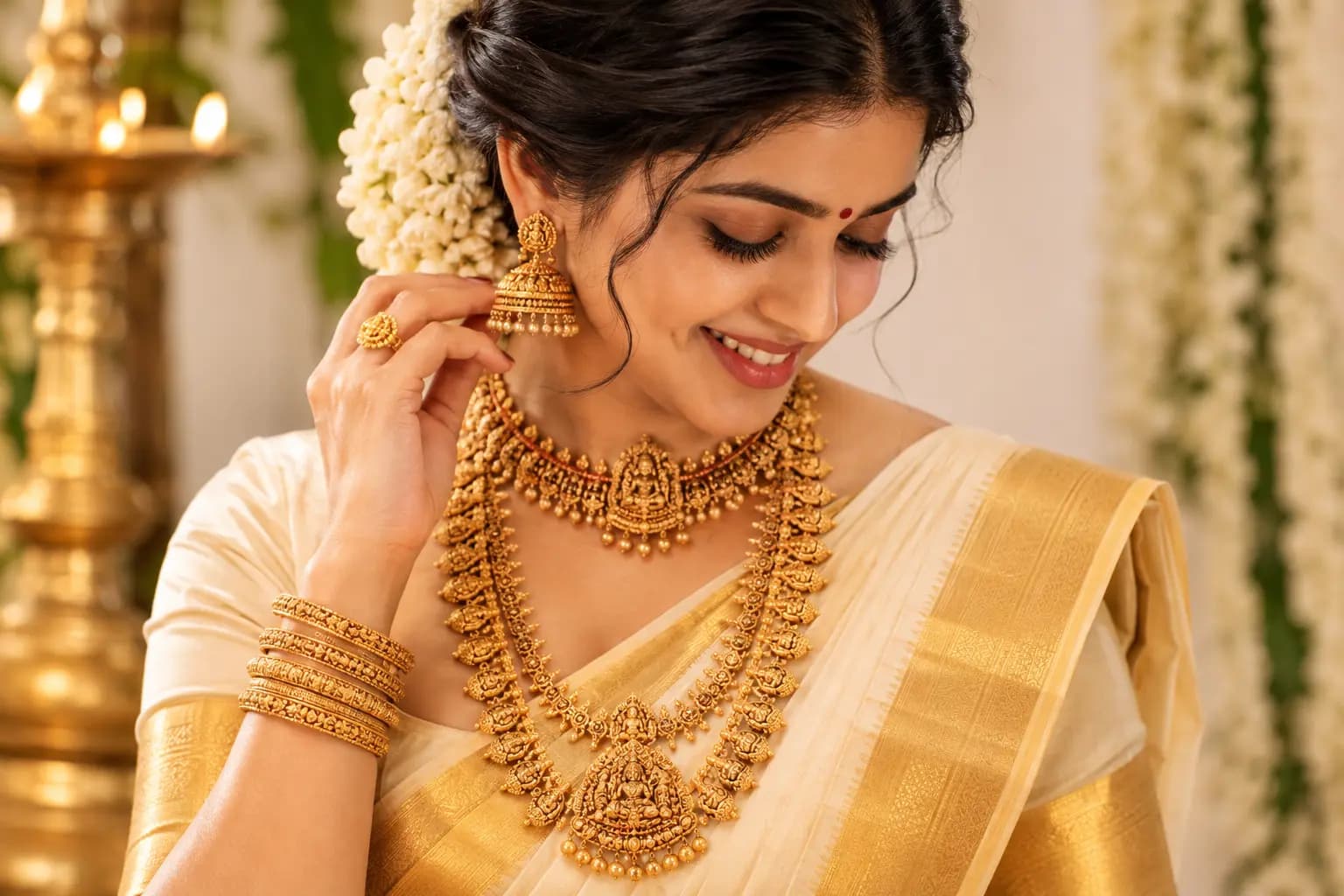
A South Indian bridal jewellery set may contain multiple necklaces, bangles, earrings, hair jewellery, and other traditional ornaments. These choices are based on the bride's region, wedding traditions, saree, family customs, and personal preferences. A Kerala bride might be fond of wearing a kasu mala and traditional jhimkis, and a Tamil bride may opt for a Lakshmi haram, oddiyanam, and nethi chutti. There's no one specific checklist that all brides need to follow. The difficulty lies in picking pieces that look good together without restricting the bride's movement. Understanding the different types of traditional gold jewellery can help brides make informed choices before their wedding.
Traditional Gold Jewellery for South Indian Weddings
There are several varieties of South Indian bridal jewellery. Certain pieces are valued for their traditional designs, while others complete specific parts of the bride's attire. These are ten jewellery categories to consider when planning a bridal jewellery collection.
Kasu Mala: The Classic Gold Coin Necklace
Kasu Mala is a traditional necklace made of small, gold coin-shaped elements arranged in a row. Several designs include coins with Lakshmi images, while others feature plain or textured coins. The necklace has a distinctive traditional appearance and is usually worn with a silk saree. Depending on its length and coin arrangement, its position along the neckline is important. If the bride is wearing more than one necklace, she should consider where the Kasu Mala will sit before selecting another necklace. If you do not want another piece to cover its design, you can create balance by placing a shorter necklace above it.
Manga Mala: An Evergreen Mango Design
The manga mala gets its name from its mango-shaped design. It can feature a single mango motif or a row of mango motifs around the gold necklace. Gems or enamel decorations are sometimes used in these designs. It can be worn with traditional silk sarees and other jewellery featuring similar patterns. Mango size and spacing are factors that brides need to consider. If you want something more dramatic, opt for larger motifs, and if you prefer simplicity, you can go with smaller motifs.
Temple Jewellery for a Traditional Bridal Look
Temple jewellery is inspired by traditional temple art, such as images of Hindu gods and goddesses, floral decorations, and decorative elements. Many traditional designs feature a Goddess Lakshmi motif. These details and antique finishes provide a unique look. Temple jewellery is available in several forms, including necklaces, earrings, bangles, and other ornaments. If the bride wants a traditional look, she can research and compare various designs, finishes, and motifs online before buying antique jewellery online. The weight and detailing should also be considered. A heavy piece may be suitable for a short ceremony but may not be comfortable to wear throughout a full day of wedding celebrations.
Gold Haram and Long Necklaces
A gold haram is a long necklace that varies in length and design. It can be decorated with flowers, temple motifs, gold beads, or gemstone settings. To create a layered look, many brides combine a haram with a shorter necklace. The two pieces should be of different lengths so that their designs remain distinct. Their designs should also complement each other. A short and simple necklace can be paired with a longer haram, or a simpler long necklace can be worn with a more elaborate short necklace.
Bridal Gold Choker and Short Necklaces
Gold chokers come in various traditional designs, including Lakshmi motifs, floral patterns, gemstone settings, and intricate goldwork. Before selecting a choker for the bride, it is important to consider the neckline of her blouse. High necklines might not leave enough room for a wide design, while wider necklines may accommodate more elaborate designs. When buying a gold necklace online, be sure to review the actual size, weight, clasp, and product details. Photos do not necessarily show how a necklace will sit on the neck.
Traditional Gold Bangles and Vanki
Brides can choose from plain gold bangles, engraved designs, stone-studded styles, and other traditional patterns. The number and style vary by region and family. A vanki is different from a bangle. A vanki is a decorative armband worn around the upper arm, typically with a V-shaped design. Common designs feature floral motifs, gemstones, or images of deities. Fit is important for both. A vanki should not squeeze the arm but should fit snugly. Bangles should glide over the hand without causing discomfort.
Gold Earrings in the Form of Jhumkas and Jhimkis
Jhumkas and jhimkis are traditional bell-shaped or hanging earrings. They are available in many designs, from simple to elaborate, with pearls, gemstones, and intricate goldwork. The bride should consider how the earrings complement her necklace, hairstyle, and face shape. You can match oversized earrings with a minimal necklace, or a big necklace with smaller earrings. Then there is the weight problem. During long ceremonies, heavy earrings can pull on the earlobes. Check the fastening and support before you settle on a pair to wear on the big day.
Nethi Chutti and Other Hair Ornaments
A nethi chutti is a traditional forehead ornament that usually consists of a central pendant and decorative chains. It is commonly worn as part of Tamil bridal jewellery, although designs and wearing customs vary.
Other South Indian bridal hair ornaments include jadai billai, decorative pieces that are arranged along a braided hairstyle. They can include floral patterns, gold motifs, and traditional designs.
These ornaments should be purchased after the hairstyle has been planned. The way they’re positioned, how they’re secured, and their weight all affect how well they stay in place throughout the ceremony.
Gold Waist Belt (Oddiyanam)
An oddiyanam is a traditional gold waist belt worn over the saree, usually around the waist. It may have temple-like motifs, floral patterns, Lakshmi figures, or decorative gold work.
Besides enhancing the bridal look, the belt also helps keep the saree pleats in place. Its size should suit the bride's waist measurement and the way she drapes her saree.
A belt that is too tight can limit movement, and a loose belt can move around during the ceremony. Check the fit and fastening with the actual wedding saree before the function.
Anklets and Toe Rings
Anklets and toe rings are among the ornaments worn on the feet in some South Indian wedding traditions. Anklets are available in a variety of designs and materials, ranging from simple patterns to more elaborate ornaments. Toe rings, often called metti in Tamil, are traditionally made of silver in Tamil wedding customs, although materials and customs vary by community.
Materials and designs vary by region and family tradition. In some cultures, toe rings are associated with marriage traditions. Brides should follow the customs of their family and remember that not every ornament is essential.
Choosing Bridal Jewellery That Works Together
A bridal jewellery collection should complement the wedding outfit and the bride's taste. Brides should consider the following points before making their final decision:
-
Set a budget: Decide how much to allocate across necklaces, earrings, bangles, and other ornaments.
-
Check the weight: Heavy ornaments can become uncomfortable during long wedding ceremonies.
-
Plan the combinations: Different necklace lengths, motifs, and finishes can be coordinated, even before buying separate pieces.
-
Verify purity: In addition to checking the BIS logo, purity mark, and six-character alphanumeric HUID on hallmarked gold jewellery, buyers can verify the HUID through the BIS Care App.
-
Check the fit: Try waist belts, bangles, and chokers with the wedding outfit.
-
Think about future use: Go for ornaments that can also be worn during festivals and family gatherings.
For brides looking for traditional craftsmanship, TT Devassy Jewellery's ANTIKA range features heritage-inspired creations influenced by temple art. Its collection of antique-finished necklaces, chokers, and bangles offers options for brides who prefer traditional jewellery.
Conclusion
South Indian bridal jewellery styles vary according to regional customs, family traditions, and personal choices. One bride may find a kasu mala, manga mala, temple necklace, or oddiyanam to be her special piece, while another may prefer just a few carefully chosen ornaments. The right choices are ornaments that complement the wedding outfit, are reasonably comfortable, and reflect the bride's personal style. A carefully put-together collection can also remain part of family celebrations long after the wedding ceremony.
